Rubus oxyanchus – Series Sylvatici
back to Alphabetical index · Taxonomic index
Predominantly a species of central southern England, mainly Hampshire, Dorset and the Isle of Wight, with outliers in neighbouring counties, including Surrey. A typical member of the series, with no stalked glands, sparsely hairy stems and leaflets not felted below. Identification features include the pink flowers with broad petals and long styles, large leaflets with a round or oblong terminal leaflet and an angled stem with only slightly slanted prickles.
Note: most of these photos were taken of plants at a single site (Browndown Common, Gosport, Hampshire), so plants at other sites may differ slightly according to growing conditions and situation. This is a rather nondescript species for which lookalikes occur, but it may prove to be much more widespread at least across southern England than is currently known. It was first described from northern France and is also recorded from Belgium.
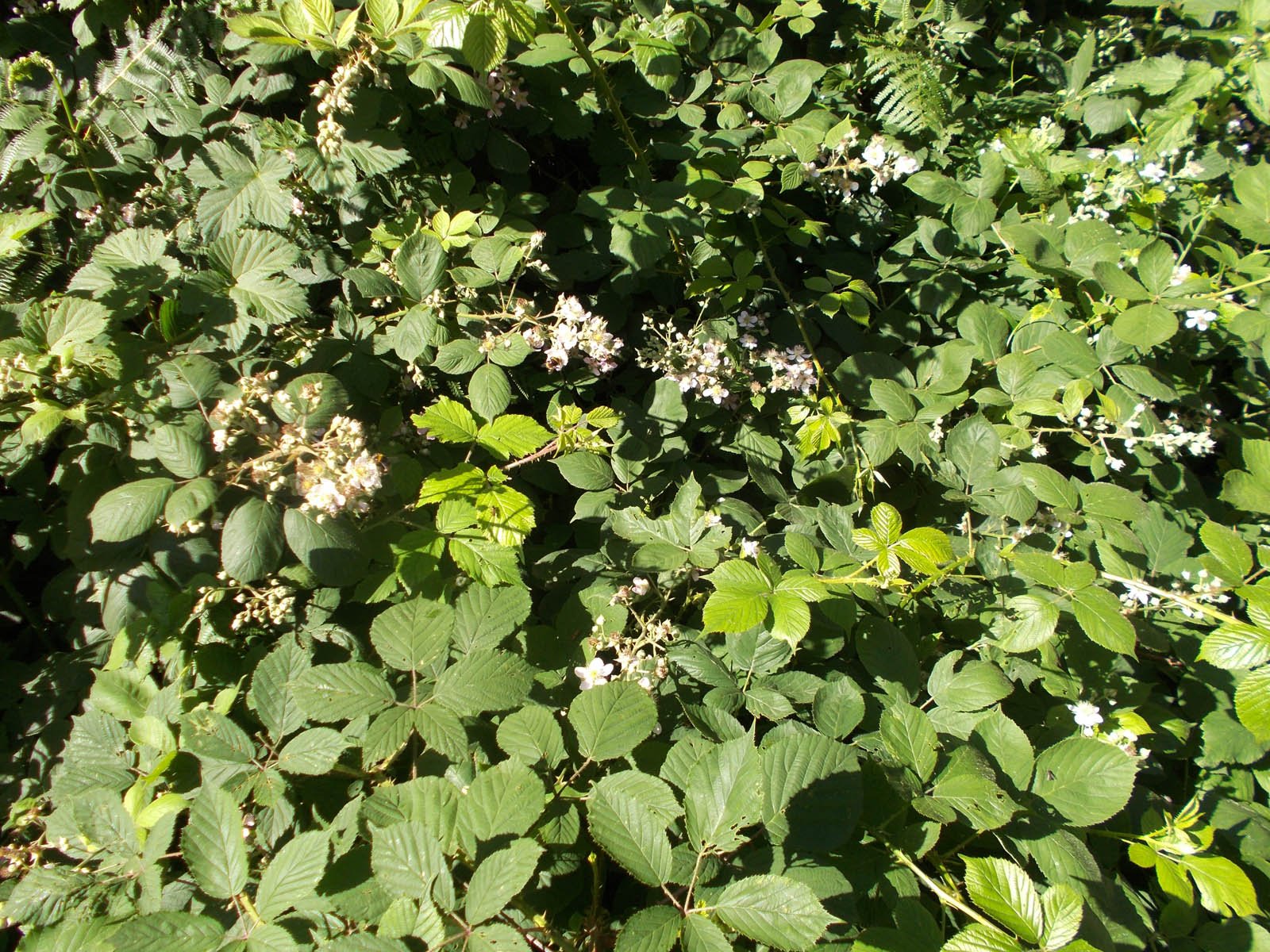
It is a tall, robust species and can grow as single bushes or form small colonies, typically in partial shade at the edge of woodland or heathland, on acid soils. Image below courtesy of David Leadbetter
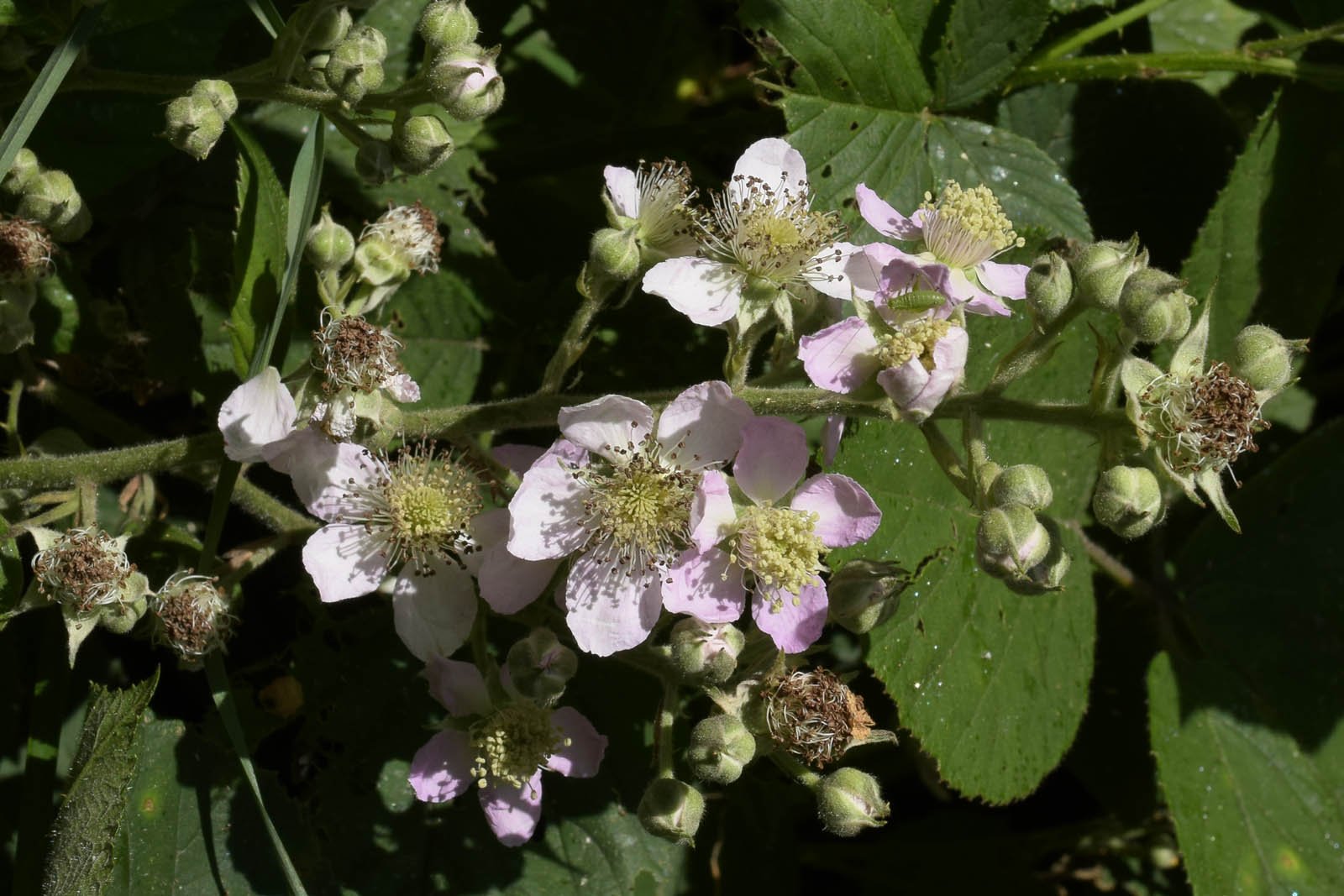
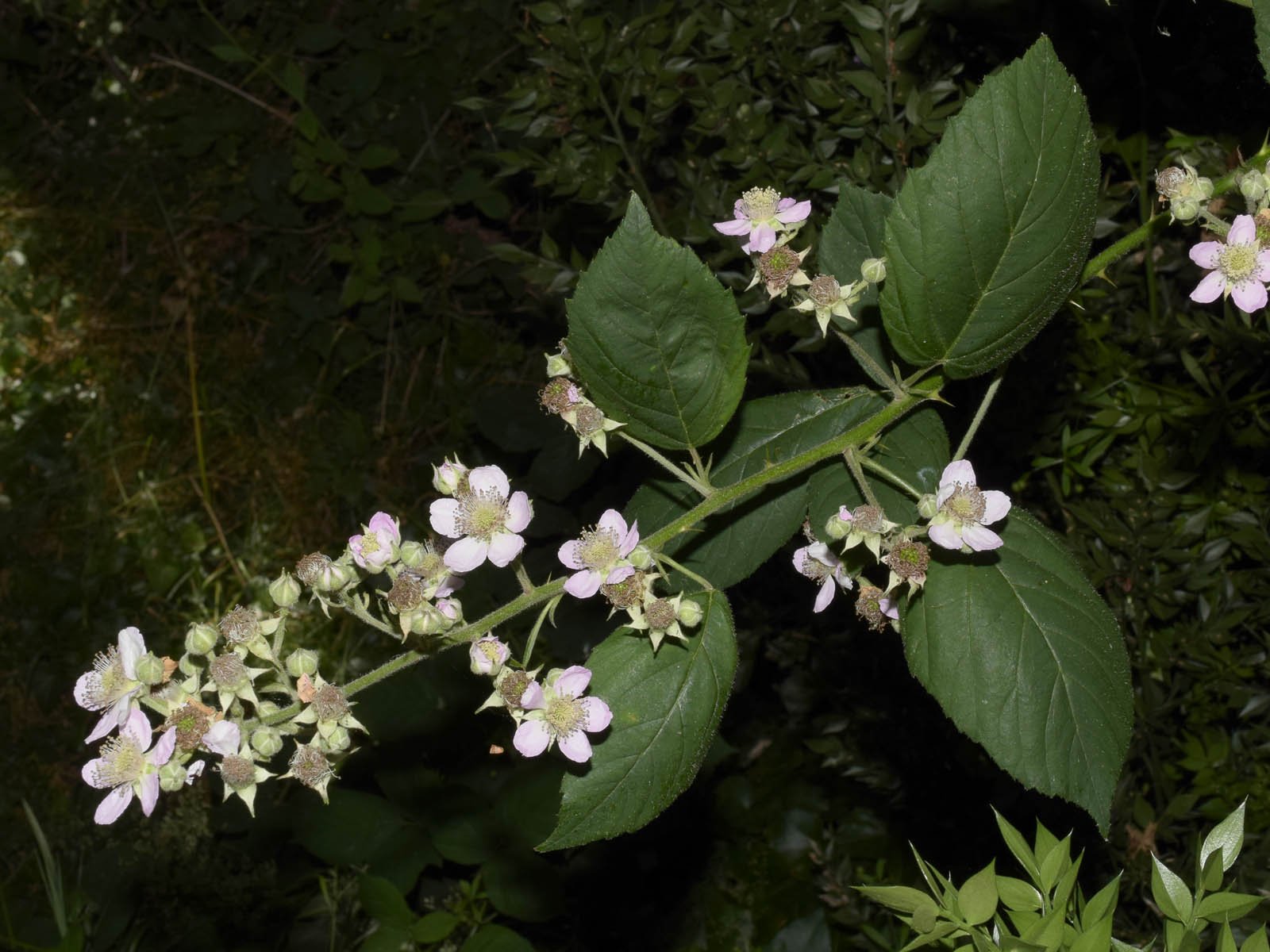
The panicle is long and narrowly cylindrical with strongly ascending lower branches. The upper part of the rachis and the floral branches are felted and almost unarmed (scattered fine prickles), but lower down it may be nearly glabrous with some longer prickles. Large single and trifoliate leaves occur lower down the panicle.
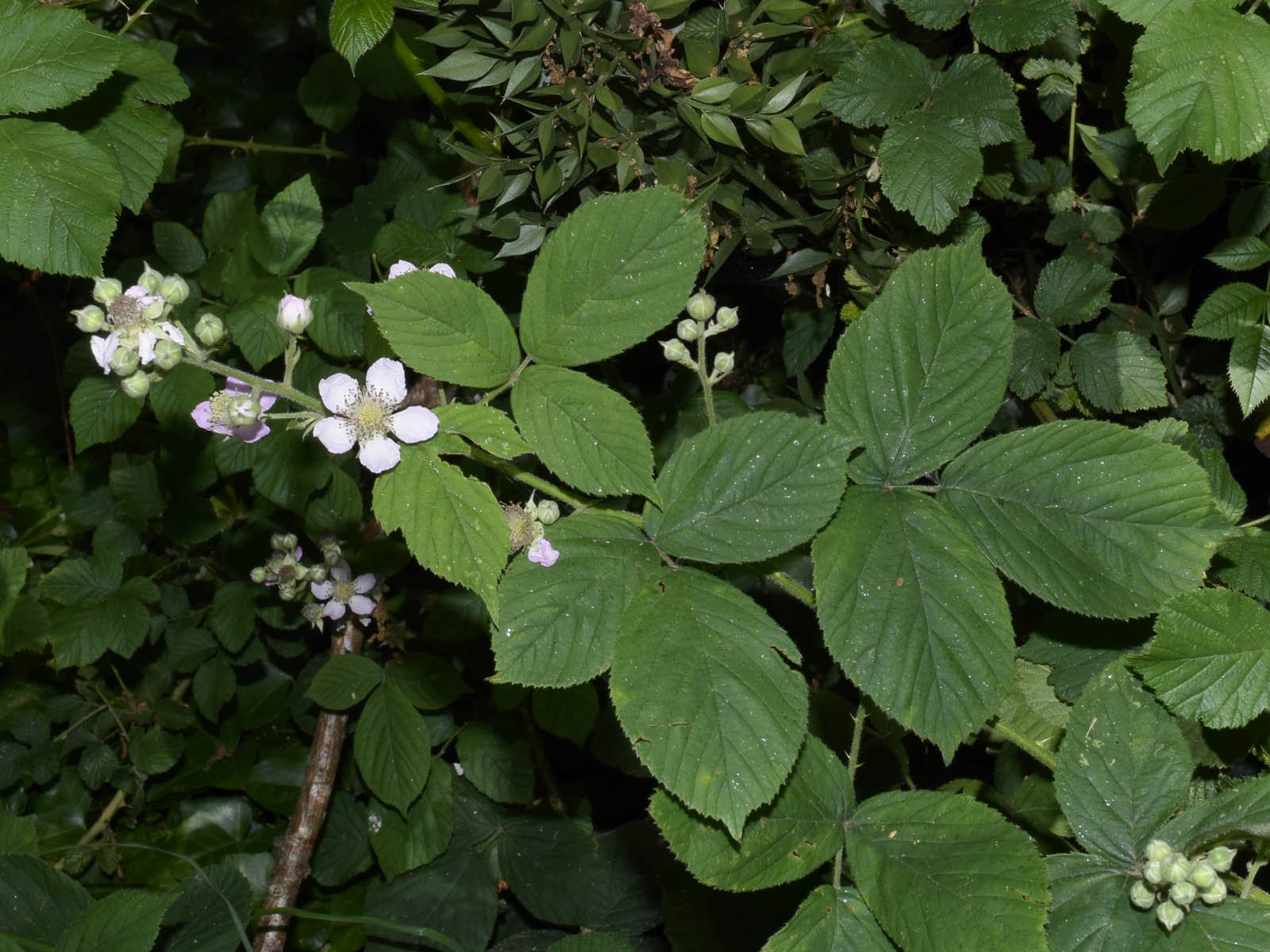
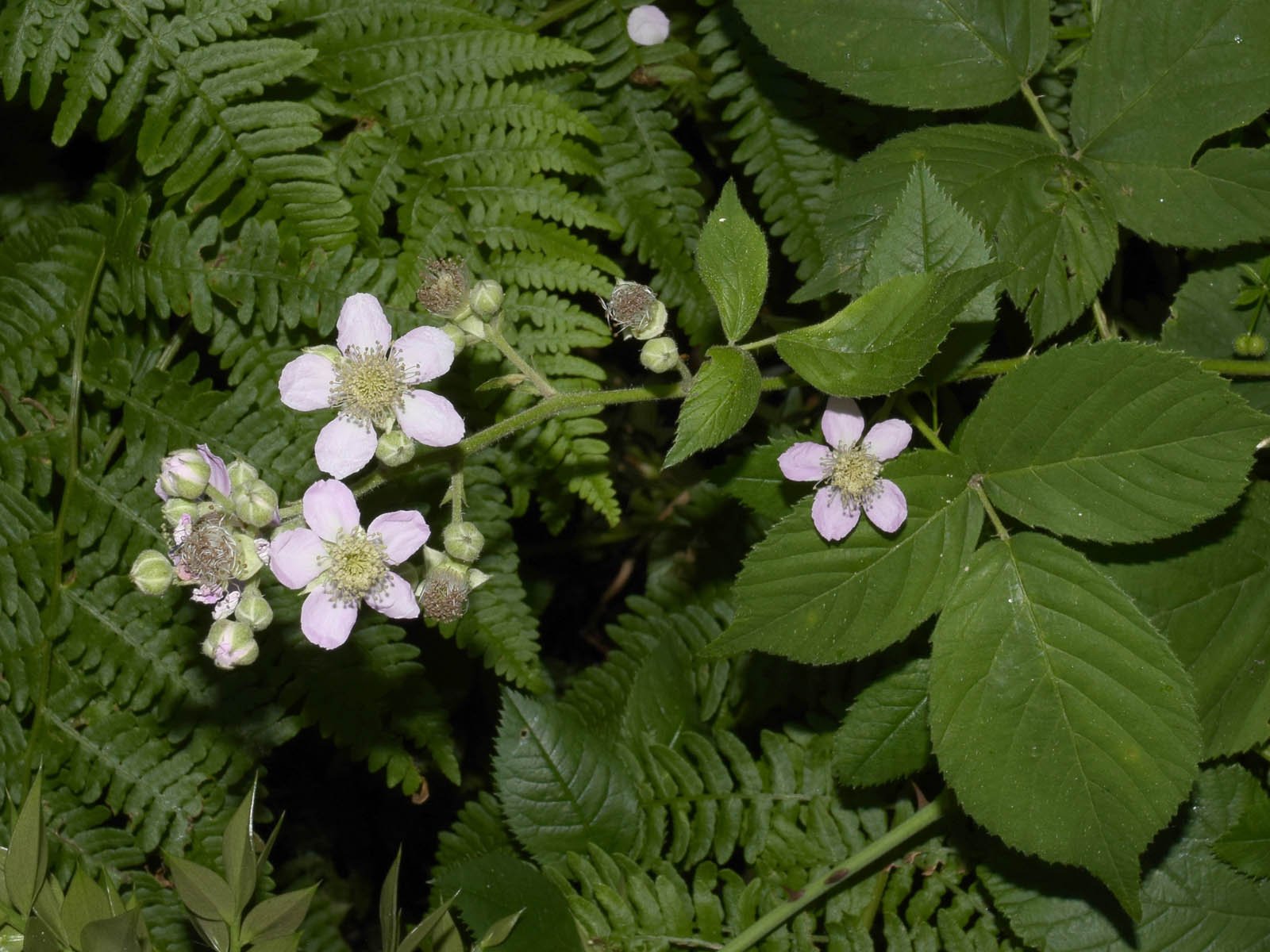
Flowers are c.2.5cm diameter, slightly cupped; petals bright pink, turning paler or almost white when fully open; broadly elliptical, c.9-10 x 6-7mm, often contiguous. Styles exceed the stamens, the outer ones being much longer. Styles are pale yellow; anthers glabrous; carpels and receptacle usually hairy.
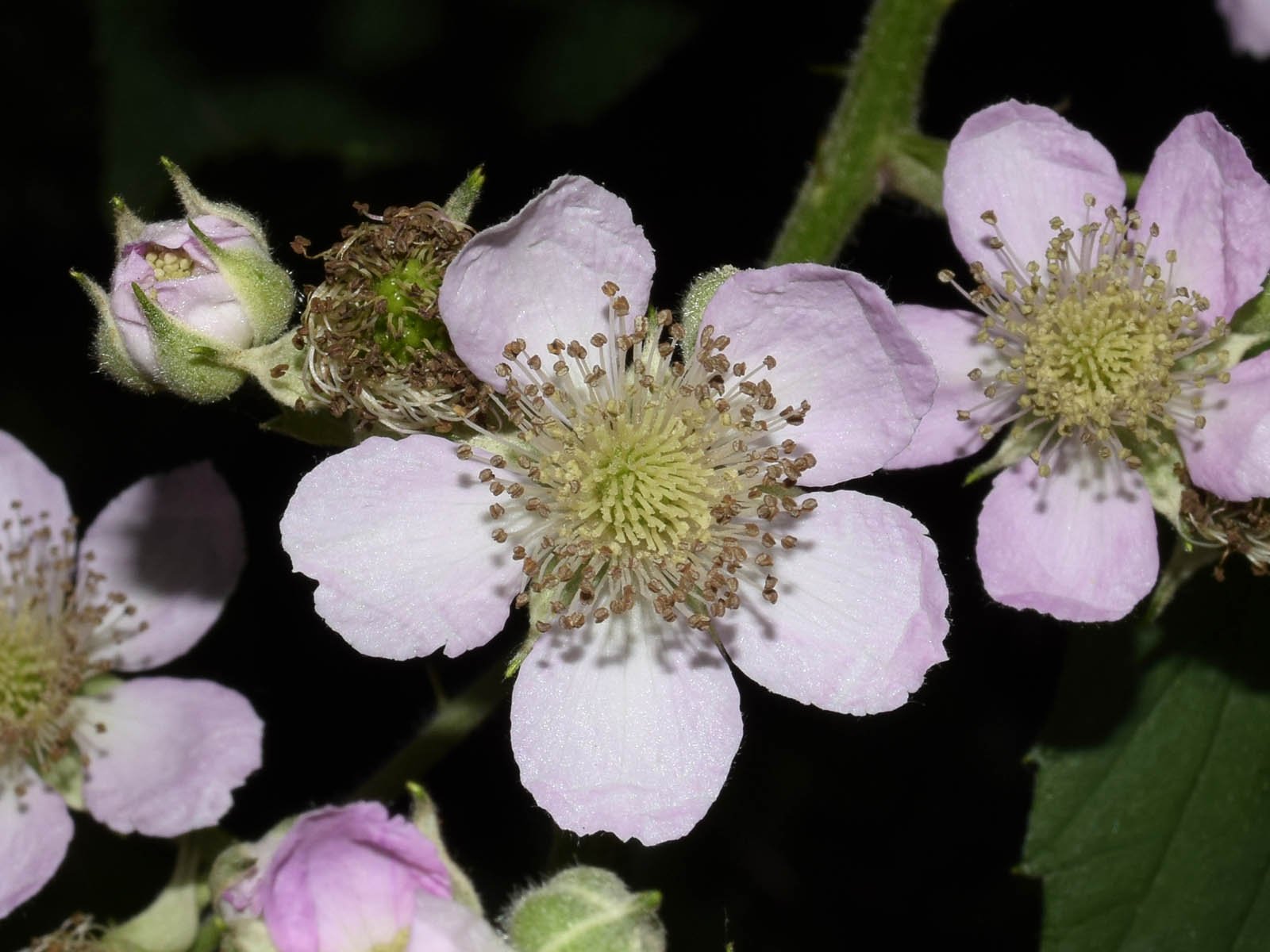
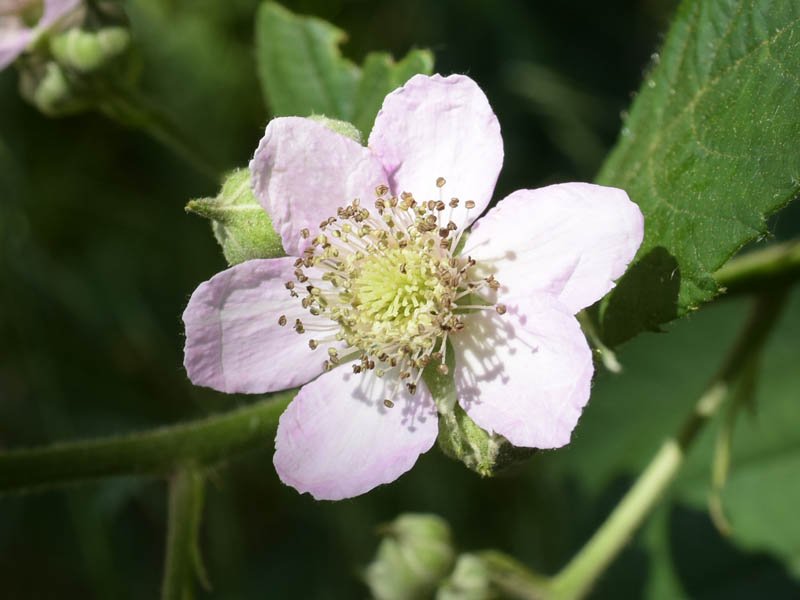
Sepals are relatively small, finely pointed, felted with a pale margin, without glands and rarely one or two small acicles; reflexed in flower.
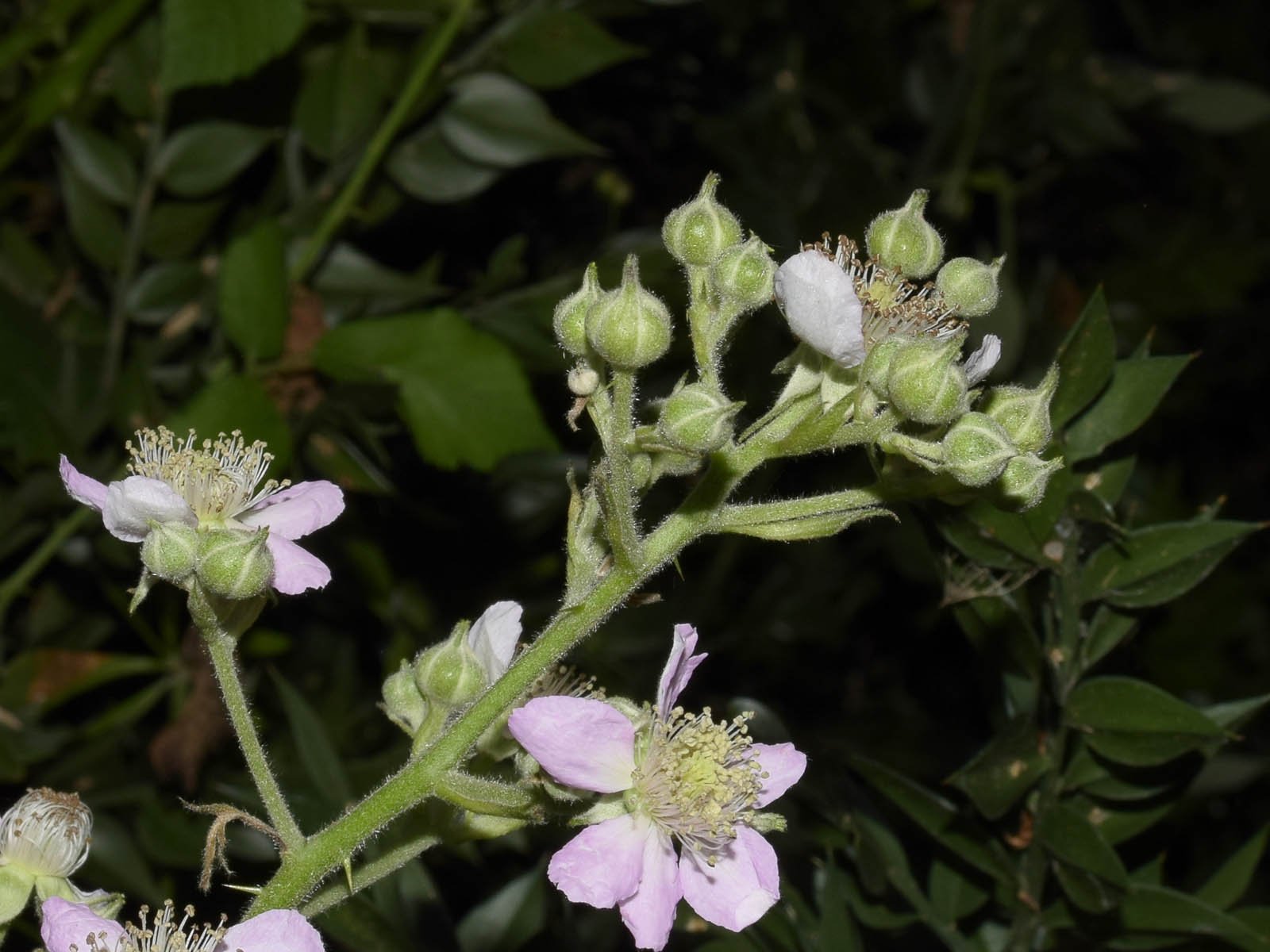
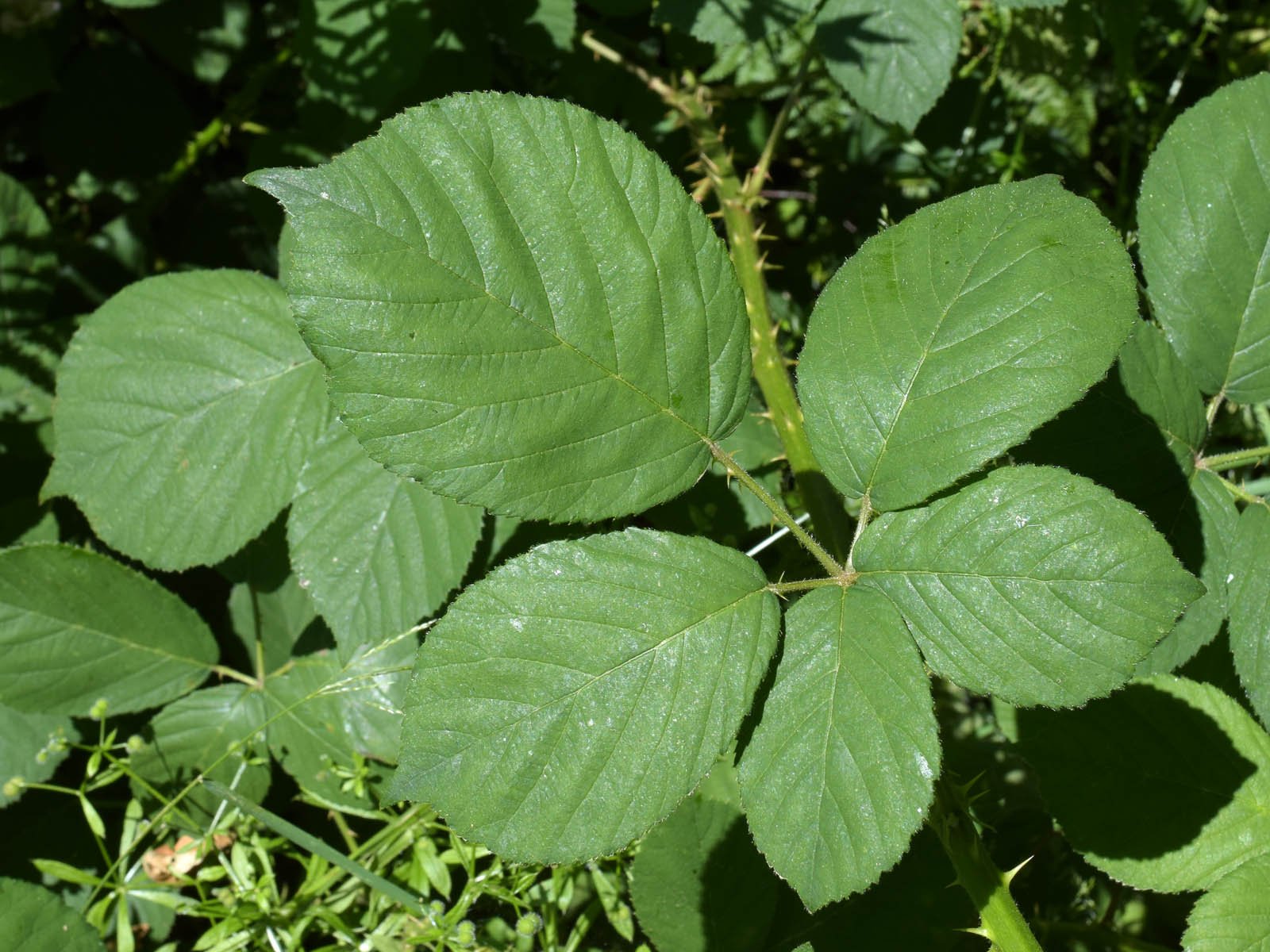
Leaves are (3)-5 foliate; leaflets usually slightly imbricate, somewhat dull, slightly greyish green and sparsely hairy above, finely and shallowly serrate, often convex. Veins appear quite shallow
(i.e. not plicate) and the leaves feel relatively thin due to lack of felting below. The terminal leaflet is quite large, c.6cm wide x 7cm long but varies from nearly round to broadly obovate; the apex is usually shortly cuspidate and the base shallowly cordate. Plants growing in shade can have smaller leaflets.
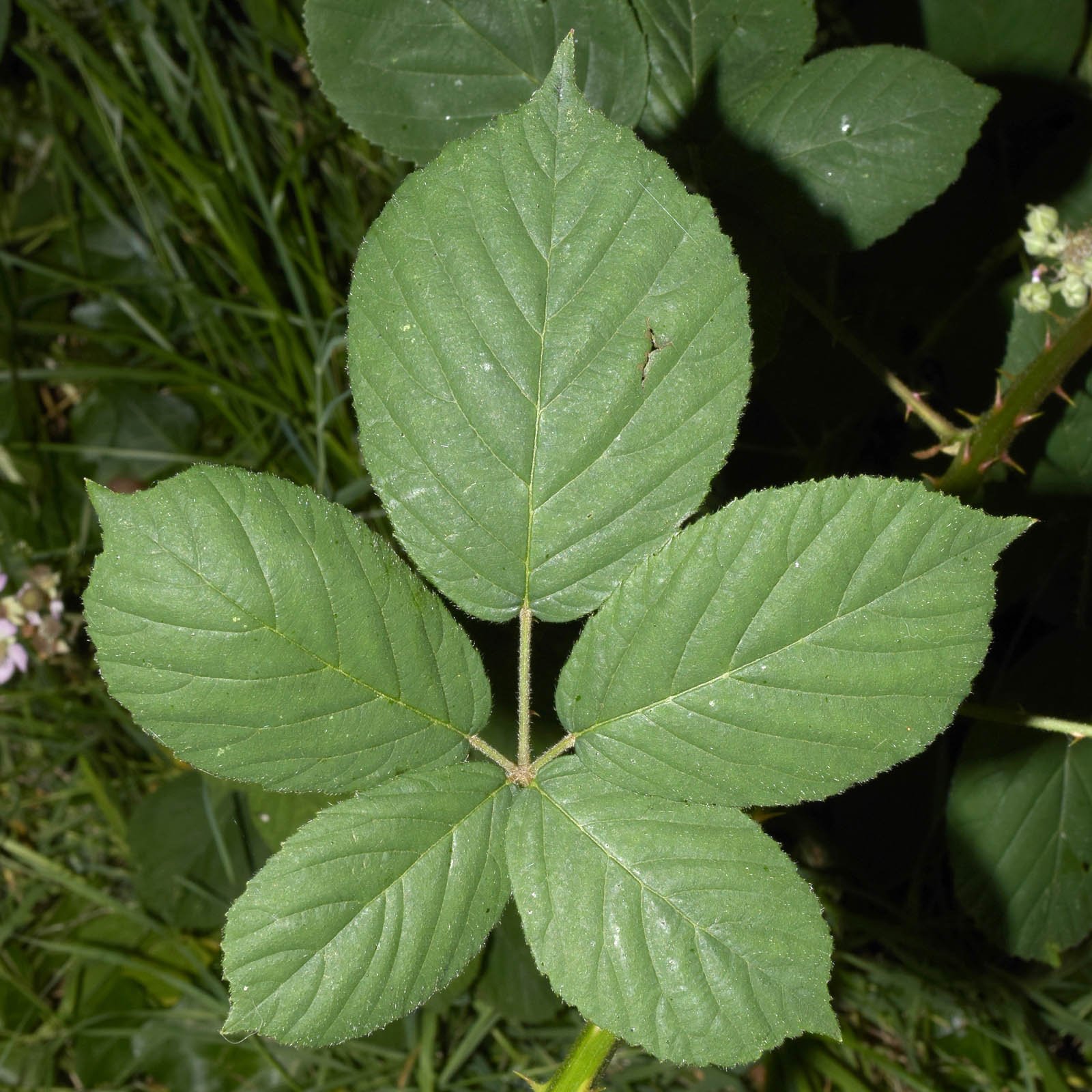
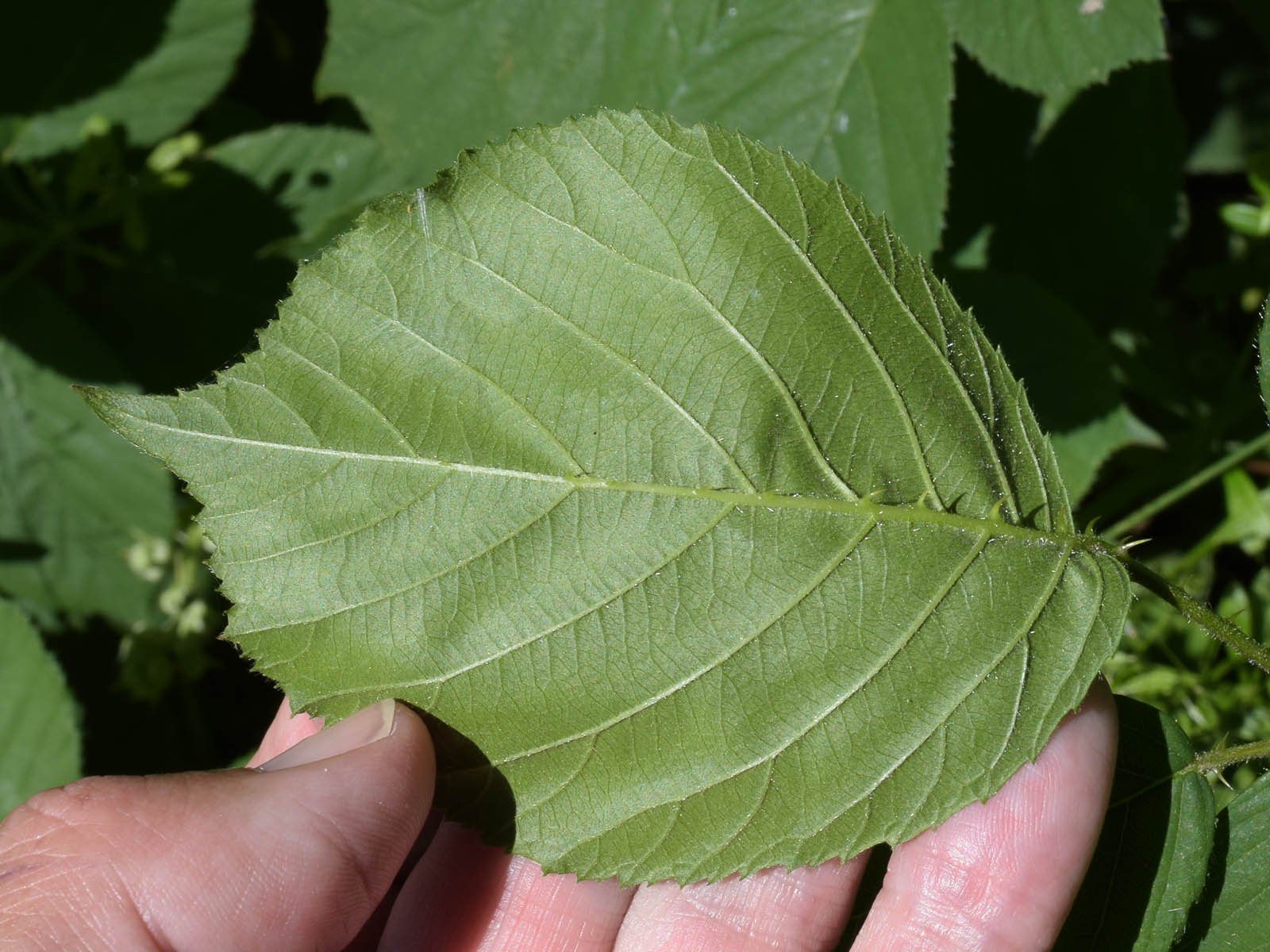
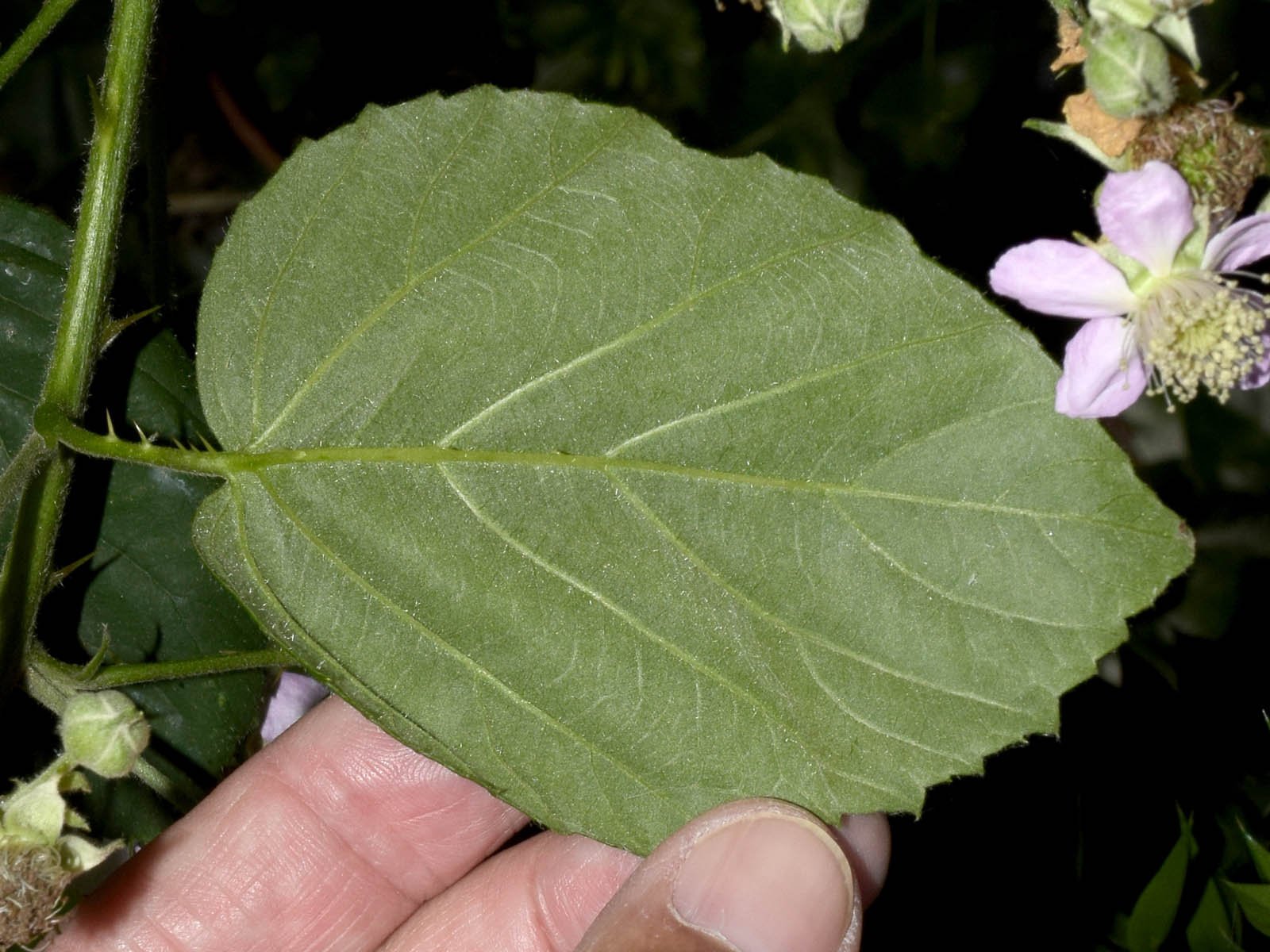
Stem and panicle leaflets are sparsely hairy below, mainly on the veins, but not felted; though can sometimes appear slightly greyish-green.
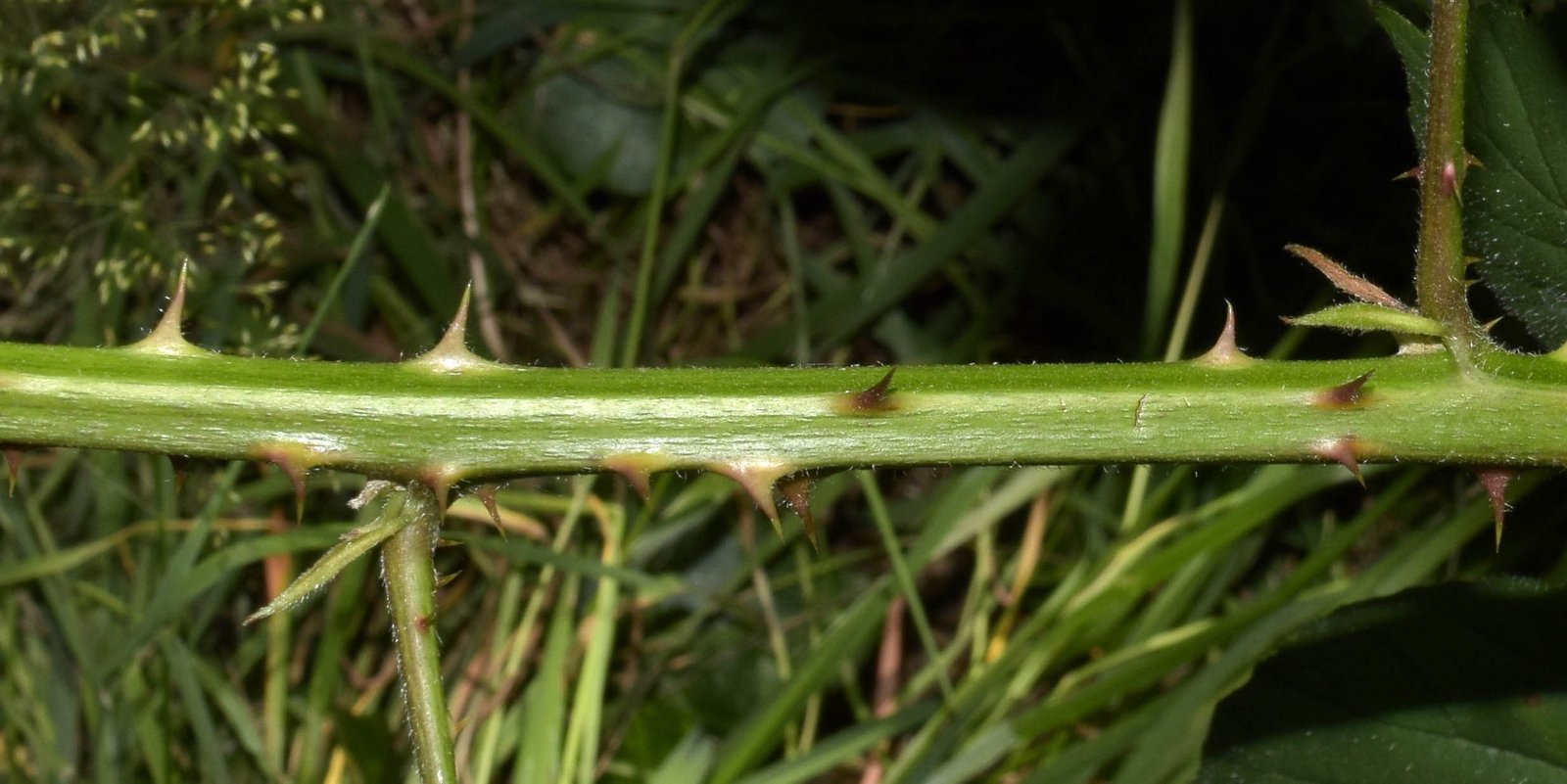
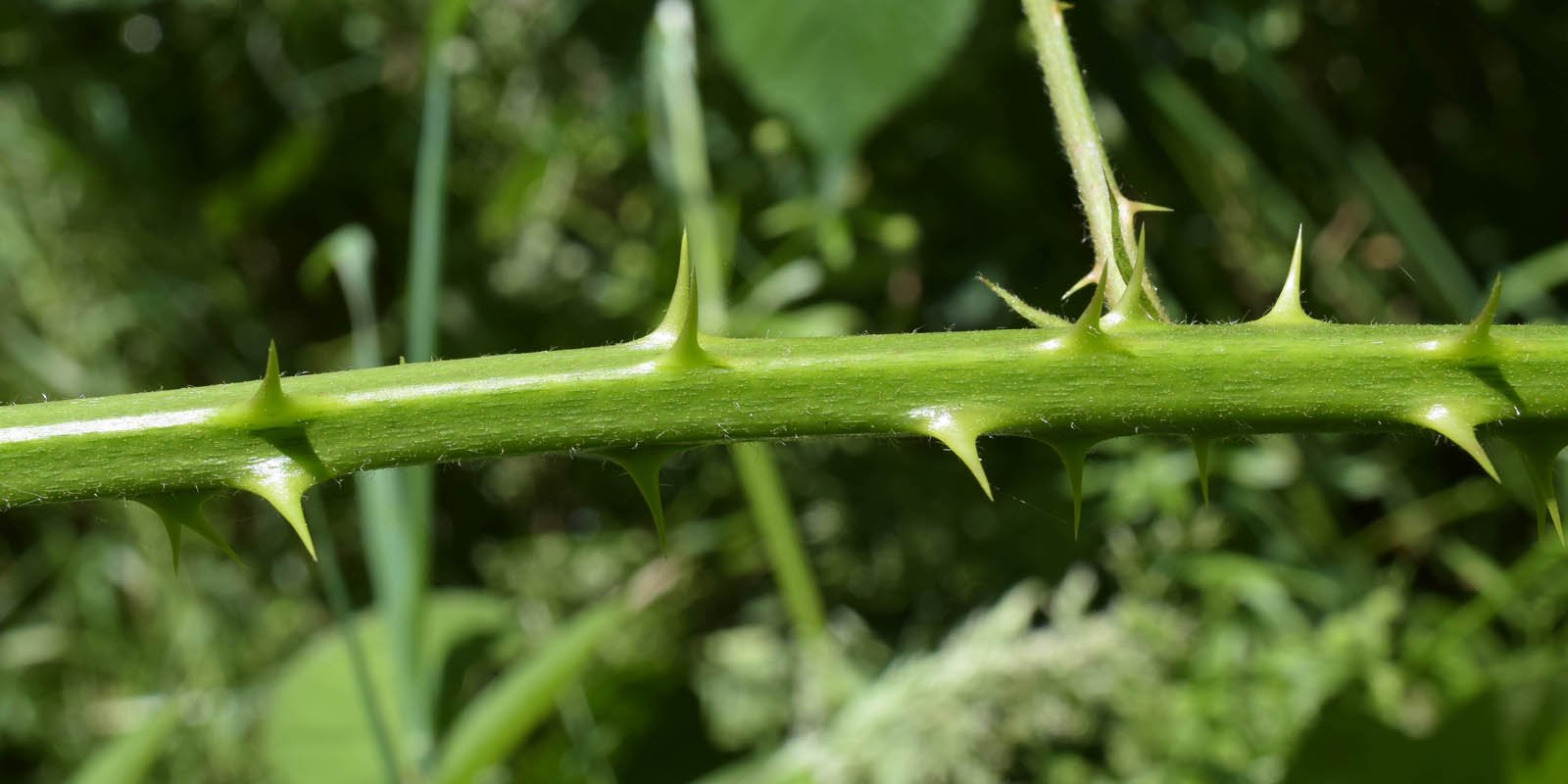
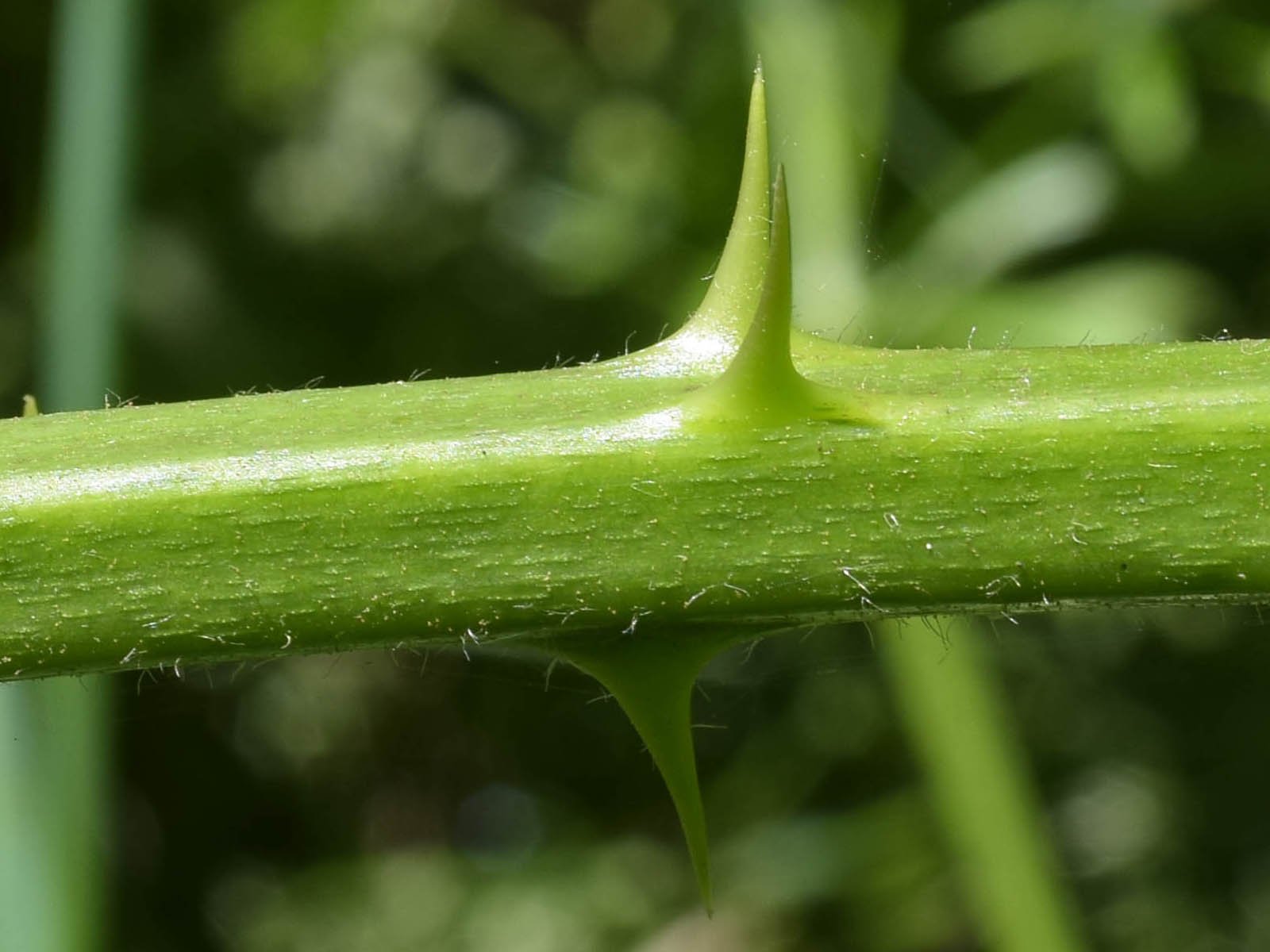
The first-year stem (primocane) turns dark red when fully exposed but more typically remains green, as in these photos and often somewhat shining. It is bluntly to sharply angled and may be distinctly furrowed. There are no stalked glands (sessile glands will usually be present), sparsely hairy when young becoming glabrous with age or exposure; prickles are about as long as the stem diameter, almost patent to slightly downturned, fine with a broad base.